
UI / UX Design
Senior GO
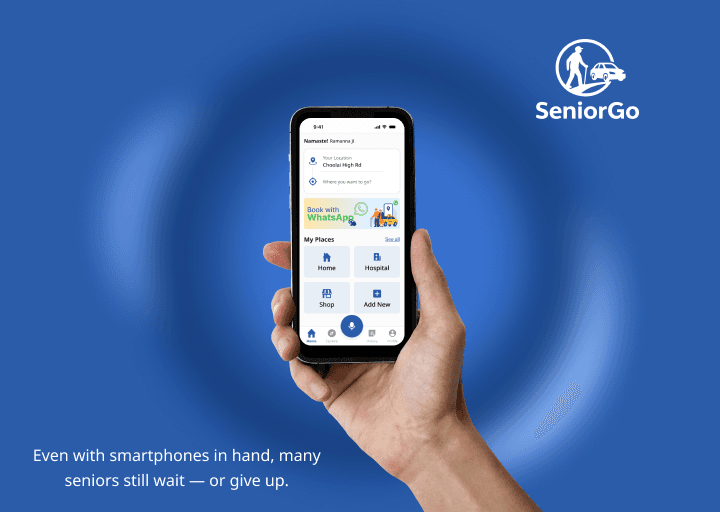
Intuitive Innovators PRESENTS Even with smartphones in hand, many seniors still wait — or give up.
Year :
2024
Industry :
seniors
Client :
SENIOR
Project Duration :
6 weeks
Problem :
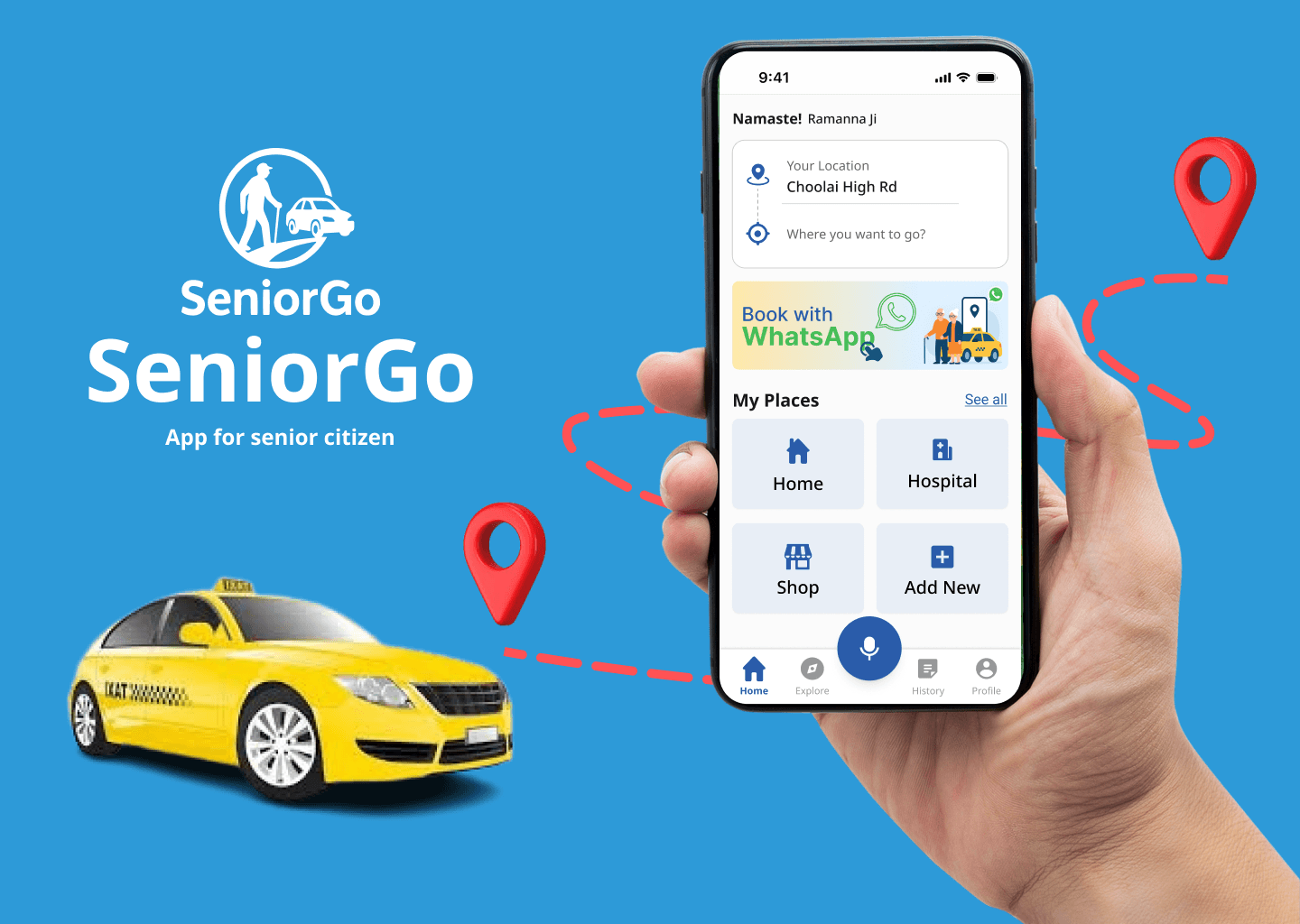
Senior Go is a digital platform designed to assist senior citizens in traveling independently while ensuring safety, comfort, and reliability. The app combines ride booking, caregiver coordination, and health-friendly navigation features — creating a bridge between mobility freedom and emotional reassurance.
Many elderly individuals face challenges in booking rides due to complex apps, unsafe experiences, and communication barriers. Families often worry about their well-being when traveling alone.
Senior Go addresses these pain points by creating a simple, accessible, and secure travel experience tailored specifically for seniors.
Solution :
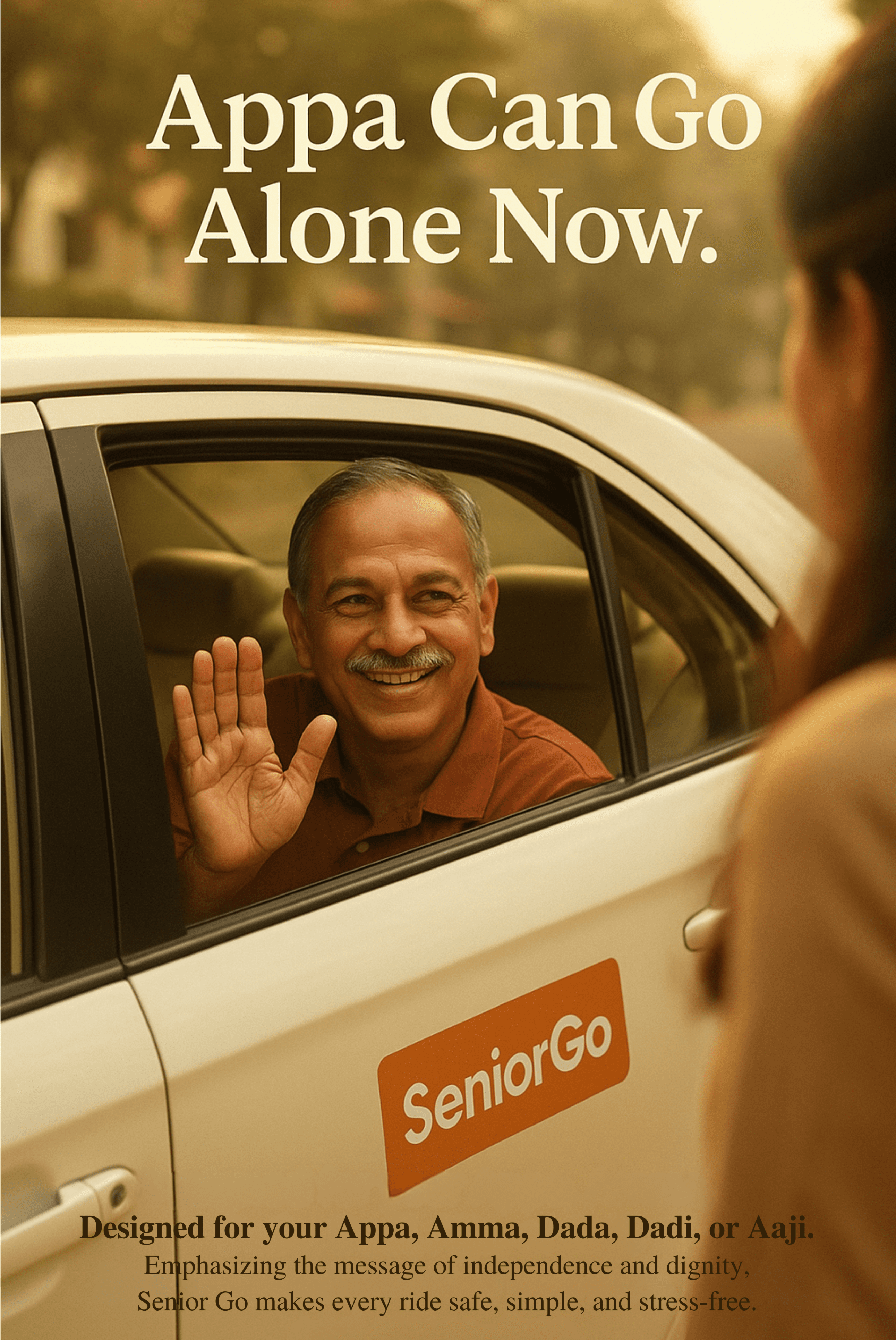
To address the challenges faced by elderly users, Senior Go delivers an intuitive, accessible, and secure mobility experience — combining simplicity with empathy.
1. Simplified Ride Booking
A one-tap booking flow with clear visual hierarchy.
Large buttons, readable typography, and minimal steps designed for motor and visual comfort.
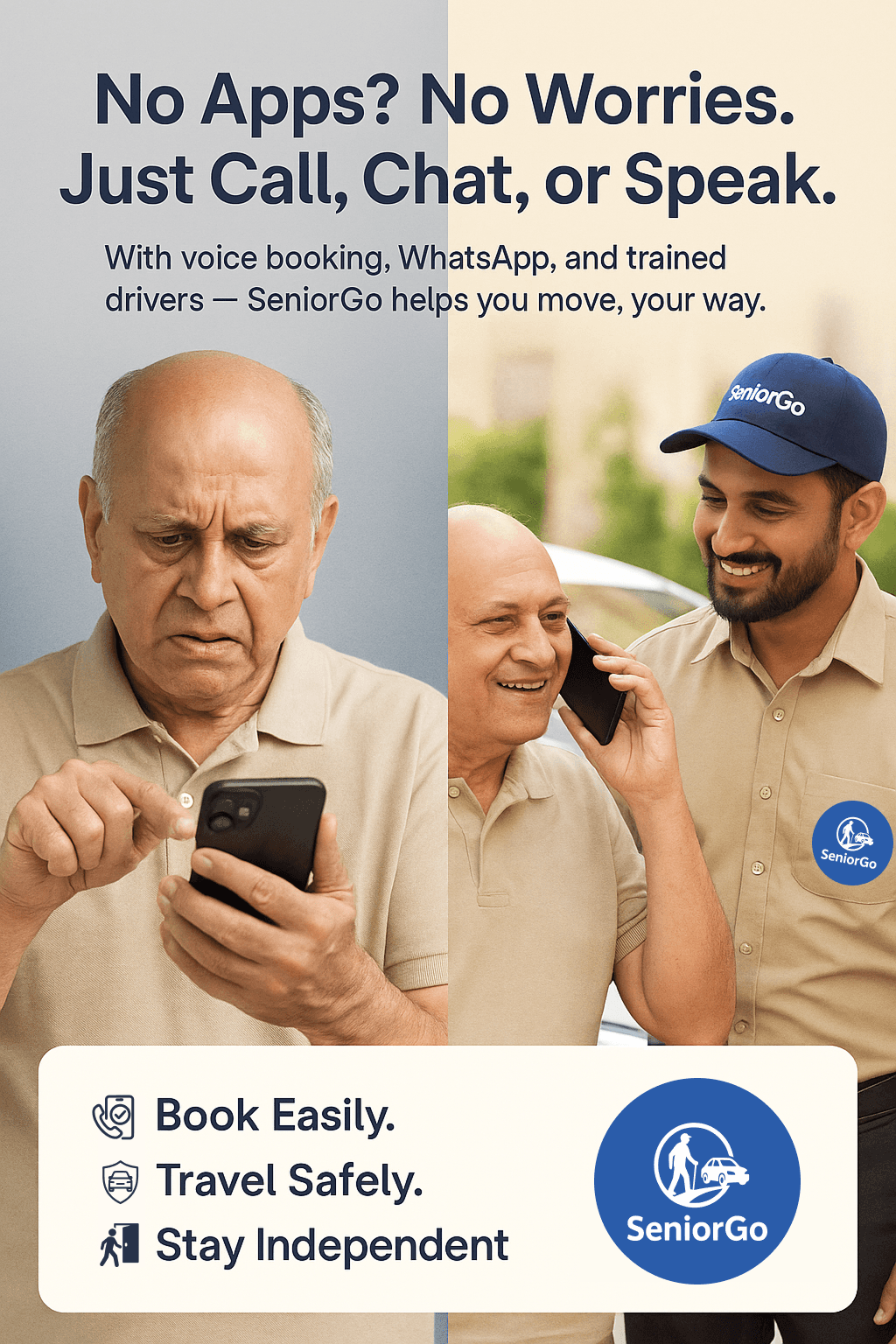
Voice input and guided prompts enable seniors to book rides without typing.
2. Caregiver Integration
A linked caregiver dashboard lets family members track trips in real-time.
Instant alerts (ride started, completed, or delayed) reduce anxiety and ensure peace of mind.
3. Safety & Assistance
A dedicated SOS button connects instantly to caregivers or emergency contacts.
Drivers receive special senior-assistance instructions to improve interaction quality.
4. Accessibility by Design
WCAG-compliant color contrast and large iconography.
Simplified navigation with predictable layouts and contextual guidance.
High visibility and consistent visual feedback after every action.
5. Personalized Experience
Option to save favorite destinations like home, hospital, or temple.
Adaptive font sizing and screen contrast modes for visual comfort.
Personalized notifications and reminders for scheduled rides.
Challenge :
Designing for senior citizens required balancing accessibility, simplicity, and trust — each posing unique UX challenges that demanded empathy-driven solutions.
1. Digital Literacy Barriers
Many seniors lacked confidence using smartphones or apps. Most were unfamiliar with app gestures, icons, or text-heavy screens, leading to hesitation and confusion during initial interactions.
→ Design response: Introduced voice guidance, one-tap booking, and clear step-by-step feedback to build confidence.
2. Visual & Motor Limitations
Low vision, shaky hands, and slower reaction times made typical ride-booking interfaces difficult to use.
→ Design response: Used large tappable areas, bold typography, high contrast colors, and simplified layouts for ease of interaction.
3. Trust & Safety Concerns
Seniors and their families were worried about driver behavior, location tracking, and data security.
→ Design response: Added real-time tracking for caregivers, SOS emergency button, and driver identity verification for transparency and reassurance.
4. Cognitive Overload
Multiple screens, long forms, and small icons overwhelmed elderly users, causing them to abandon the booking process.
→ Design response: Created a minimal booking flow (3 steps) and used clear visual cues and voice instructions to guide users.
5. Cross-Generational Coordination
Caregivers wanted to help but found it challenging to coordinate or monitor rides remotely.
→ Design response: Designed a linked caregiver dashboard with live updates and simplified ride management features.
6. Accessibility Standards
Balancing modern UI aesthetics with strict accessibility standards (WCAG) while keeping the interface friendly for all age groups.
→ Design response: Applied inclusive design principles — color contrast, large font sizes, and tactile feedback — without compromising the visual identity.
Summary :
Senior Go is an inclusive mobility platform designed to help senior citizens travel independently and safely while staying connected with their caregivers. The goal was to create a digital experience that combines simplicity, empathy, and trust — empowering elderly users who often feel left behind by modern ride-booking apps.
The project began with in-depth user research and interviews involving seniors and caregivers to uncover key pain points such as complex navigation, low visibility, and safety concerns. Insights from this research guided the design of a minimal, accessible, and voice-assisted interface tailored to elderly users’ physical and cognitive needs.
Through iterative design, prototyping, and usability testing, the final solution evolved into a platform that allows seniors to book rides in one tap, share live updates with family, and access emergency support instantly — ensuring confidence and independence in every journey.
The outcome demonstrated a 45% improvement in task completion rate, increased caregiver trust, and significantly enhanced user satisfaction. Senior Go stands as a testament to how human-centered design can restore independence and dignity for aging users through thoughtful, accessible innovation.
More Projects



UI / UX Design
Senior GO
Intuitive Innovators PRESENTS Even with smartphones in hand, many seniors still wait — or give up.
Year :
2024
Industry :
seniors
Client :
SENIOR
Project Duration :
6 weeks
Problem :
Senior Go is a digital platform designed to assist senior citizens in traveling independently while ensuring safety, comfort, and reliability. The app combines ride booking, caregiver coordination, and health-friendly navigation features — creating a bridge between mobility freedom and emotional reassurance.
Many elderly individuals face challenges in booking rides due to complex apps, unsafe experiences, and communication barriers. Families often worry about their well-being when traveling alone.
Senior Go addresses these pain points by creating a simple, accessible, and secure travel experience tailored specifically for seniors.
Solution :
To address the challenges faced by elderly users, Senior Go delivers an intuitive, accessible, and secure mobility experience — combining simplicity with empathy.
1. Simplified Ride Booking
A one-tap booking flow with clear visual hierarchy.
Large buttons, readable typography, and minimal steps designed for motor and visual comfort.
Voice input and guided prompts enable seniors to book rides without typing.
2. Caregiver Integration
A linked caregiver dashboard lets family members track trips in real-time.
Instant alerts (ride started, completed, or delayed) reduce anxiety and ensure peace of mind.
3. Safety & Assistance
A dedicated SOS button connects instantly to caregivers or emergency contacts.
Drivers receive special senior-assistance instructions to improve interaction quality.
4. Accessibility by Design
WCAG-compliant color contrast and large iconography.
Simplified navigation with predictable layouts and contextual guidance.
High visibility and consistent visual feedback after every action.
5. Personalized Experience
Option to save favorite destinations like home, hospital, or temple.
Adaptive font sizing and screen contrast modes for visual comfort.
Personalized notifications and reminders for scheduled rides.
Challenge :
Designing for senior citizens required balancing accessibility, simplicity, and trust — each posing unique UX challenges that demanded empathy-driven solutions.
1. Digital Literacy Barriers
Many seniors lacked confidence using smartphones or apps. Most were unfamiliar with app gestures, icons, or text-heavy screens, leading to hesitation and confusion during initial interactions.
→ Design response: Introduced voice guidance, one-tap booking, and clear step-by-step feedback to build confidence.
2. Visual & Motor Limitations
Low vision, shaky hands, and slower reaction times made typical ride-booking interfaces difficult to use.
→ Design response: Used large tappable areas, bold typography, high contrast colors, and simplified layouts for ease of interaction.
3. Trust & Safety Concerns
Seniors and their families were worried about driver behavior, location tracking, and data security.
→ Design response: Added real-time tracking for caregivers, SOS emergency button, and driver identity verification for transparency and reassurance.
4. Cognitive Overload
Multiple screens, long forms, and small icons overwhelmed elderly users, causing them to abandon the booking process.
→ Design response: Created a minimal booking flow (3 steps) and used clear visual cues and voice instructions to guide users.
5. Cross-Generational Coordination
Caregivers wanted to help but found it challenging to coordinate or monitor rides remotely.
→ Design response: Designed a linked caregiver dashboard with live updates and simplified ride management features.
6. Accessibility Standards
Balancing modern UI aesthetics with strict accessibility standards (WCAG) while keeping the interface friendly for all age groups.
→ Design response: Applied inclusive design principles — color contrast, large font sizes, and tactile feedback — without compromising the visual identity.
Summary :
Senior Go is an inclusive mobility platform designed to help senior citizens travel independently and safely while staying connected with their caregivers. The goal was to create a digital experience that combines simplicity, empathy, and trust — empowering elderly users who often feel left behind by modern ride-booking apps.
The project began with in-depth user research and interviews involving seniors and caregivers to uncover key pain points such as complex navigation, low visibility, and safety concerns. Insights from this research guided the design of a minimal, accessible, and voice-assisted interface tailored to elderly users’ physical and cognitive needs.
Through iterative design, prototyping, and usability testing, the final solution evolved into a platform that allows seniors to book rides in one tap, share live updates with family, and access emergency support instantly — ensuring confidence and independence in every journey.
The outcome demonstrated a 45% improvement in task completion rate, increased caregiver trust, and significantly enhanced user satisfaction. Senior Go stands as a testament to how human-centered design can restore independence and dignity for aging users through thoughtful, accessible innovation.
More Projects
UI / UX Design
Senior GO
Intuitive Innovators PRESENTS Even with smartphones in hand, many seniors still wait — or give up.
Year :
2024
Industry :
seniors
Client :
SENIOR
Project Duration :
6 weeks
Problem :
Senior Go is a digital platform designed to assist senior citizens in traveling independently while ensuring safety, comfort, and reliability. The app combines ride booking, caregiver coordination, and health-friendly navigation features — creating a bridge between mobility freedom and emotional reassurance.
Many elderly individuals face challenges in booking rides due to complex apps, unsafe experiences, and communication barriers. Families often worry about their well-being when traveling alone.
Senior Go addresses these pain points by creating a simple, accessible, and secure travel experience tailored specifically for seniors.
Solution :
To address the challenges faced by elderly users, Senior Go delivers an intuitive, accessible, and secure mobility experience — combining simplicity with empathy.
1. Simplified Ride Booking
A one-tap booking flow with clear visual hierarchy.
Large buttons, readable typography, and minimal steps designed for motor and visual comfort.
Voice input and guided prompts enable seniors to book rides without typing.
2. Caregiver Integration
A linked caregiver dashboard lets family members track trips in real-time.
Instant alerts (ride started, completed, or delayed) reduce anxiety and ensure peace of mind.
3. Safety & Assistance
A dedicated SOS button connects instantly to caregivers or emergency contacts.
Drivers receive special senior-assistance instructions to improve interaction quality.
4. Accessibility by Design
WCAG-compliant color contrast and large iconography.
Simplified navigation with predictable layouts and contextual guidance.
High visibility and consistent visual feedback after every action.
5. Personalized Experience
Option to save favorite destinations like home, hospital, or temple.
Adaptive font sizing and screen contrast modes for visual comfort.
Personalized notifications and reminders for scheduled rides.
Challenge :
Designing for senior citizens required balancing accessibility, simplicity, and trust — each posing unique UX challenges that demanded empathy-driven solutions.
1. Digital Literacy Barriers
Many seniors lacked confidence using smartphones or apps. Most were unfamiliar with app gestures, icons, or text-heavy screens, leading to hesitation and confusion during initial interactions.
→ Design response: Introduced voice guidance, one-tap booking, and clear step-by-step feedback to build confidence.
2. Visual & Motor Limitations
Low vision, shaky hands, and slower reaction times made typical ride-booking interfaces difficult to use.
→ Design response: Used large tappable areas, bold typography, high contrast colors, and simplified layouts for ease of interaction.
3. Trust & Safety Concerns
Seniors and their families were worried about driver behavior, location tracking, and data security.
→ Design response: Added real-time tracking for caregivers, SOS emergency button, and driver identity verification for transparency and reassurance.
4. Cognitive Overload
Multiple screens, long forms, and small icons overwhelmed elderly users, causing them to abandon the booking process.
→ Design response: Created a minimal booking flow (3 steps) and used clear visual cues and voice instructions to guide users.
5. Cross-Generational Coordination
Caregivers wanted to help but found it challenging to coordinate or monitor rides remotely.
→ Design response: Designed a linked caregiver dashboard with live updates and simplified ride management features.
6. Accessibility Standards
Balancing modern UI aesthetics with strict accessibility standards (WCAG) while keeping the interface friendly for all age groups.
→ Design response: Applied inclusive design principles — color contrast, large font sizes, and tactile feedback — without compromising the visual identity.
Summary :
Senior Go is an inclusive mobility platform designed to help senior citizens travel independently and safely while staying connected with their caregivers. The goal was to create a digital experience that combines simplicity, empathy, and trust — empowering elderly users who often feel left behind by modern ride-booking apps.
The project began with in-depth user research and interviews involving seniors and caregivers to uncover key pain points such as complex navigation, low visibility, and safety concerns. Insights from this research guided the design of a minimal, accessible, and voice-assisted interface tailored to elderly users’ physical and cognitive needs.
Through iterative design, prototyping, and usability testing, the final solution evolved into a platform that allows seniors to book rides in one tap, share live updates with family, and access emergency support instantly — ensuring confidence and independence in every journey.
The outcome demonstrated a 45% improvement in task completion rate, increased caregiver trust, and significantly enhanced user satisfaction. Senior Go stands as a testament to how human-centered design can restore independence and dignity for aging users through thoughtful, accessible innovation.